 Be ready when your furry friend needs you most
Whether you’re walking your spaniel along the Thames or your cat has come home with a mysterious limp, knowing basic pet first aid can make a huge difference in those first critical moments. While nothing replaces proper veterinary care, a bit of knowledge and preparation could buy precious time—or even save a life.
Here are some practical tips for managing pet emergencies with calm, confidence, and care.
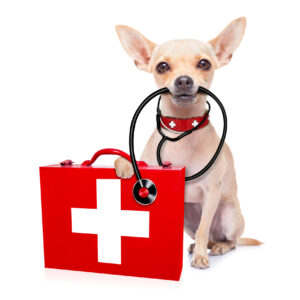
1. Keep a Pet First Aid Kit Handy
Just as you would for your family, keep a pet-specific first aid kit at home—and ideally one in your car too. A good kit should include:
- Gauze pads and cohesive bandage (e.g., Vetwrap)
- Tweezers and blunt-ended scissors
- Saline solution (for flushing eyes or wounds)
- Antiseptic wipes or dilute chlorhexidine
- A muzzle or soft restraint (even the calmest pets may bite when in pain)
- Gloves, towel, and foil blanket (for warmth/shock)
- Contact details for your vet and the nearest emergency practice – if you ring us – we will either answer or the phone will be automatically diverted to our emergency service in Maidenhead.
2. Dealing with Adders and Other Wildlife Hazards
In the Windsor Great Park, dogs VERY occasionally encounter adders (I’ve only ever seen one in 10 years at Kelperland 😊) —the UK’s only venomous snake. If your dog is bitten:
- Keep them calm and still to slow the spread of venom.
- Do not apply a tourniquet or attempt to suck out the venom.
- Carry them to reduce movement, if possible.
- Seek immediate veterinary attention.
You may also find curious dogs tangled with hedgehogs, badgers, or even ingesting things they shouldn’t, like toxic mushrooms in wooded areas.
3. Road Traffic Accidents: Stay Safe and Stabilise
If your cat or dog is hit by a car:
- Ensure your own safety first—don’t step into traffic.
- Move the animal only if necessary, supporting the spine and avoiding unnecessary movement.
- Cover wounds with clean cloth to reduce contamination and bleeding.
- Keep the pet warm and quiet—shock is a common and serious risk.
Why it matters: Time is of the essence with trauma. Stabilising breathing, bleeding, and shock while calling ahead to the vet gives your pet the best fighting chance.
4. Heatstroke: A Rising Risk in Warmer UK Summers
With climate change pushing temperatures higher, even British summers can pose a danger—especially to brachycephalic (flat-faced) breeds.
Signs of heatstroke include:
- Heavy panting, drooling, collapse
- Bright red gums or lethargy
- Vomiting or disorientation
What to do:
- Move them to a cool, shaded area.
- Wet their coat with cool (not ice-cold) water and use a fan if possible.
- Offer small sips of water.
- Get to a vet urgently—even if they seem to improve.
- Top tip: Avoid midday walks and never leave pets in cars, even with windows cracked.
5. Water Hazards: Thames-Side Cautions
If your dog loves a splash, remember:
- Swallowing river water can lead to stomach upsets or infections.
- Blue-green algae, often seen in warm, still waters (like Bray Lake or Cliveden Reach), can be toxic, this mainly manifests as an upset tummy but if so, give us a ring. Look for scummy, greenish water and posted warnings.
- If your dog falls into a fast current, don’t jump in after them—call emergency services. Most dogs can swim better than we can!
Rinse your dog after river swims to reduce risk of skin irritation or infections.
6. When to Call the Vet—And What to Say
Even if you’re unsure whether it’s an emergency, call us on 01628 624935
We’re here to help and no question is a silly one – if you’re worried, just give us a call 😊
If it’s outside of our hours the phone will automatically go through to our emergency service, who are there to help you.
New family member? Take a look at our Puppy & Kitten Info Sheets.
You can even download them and pass them on to friends and family.