
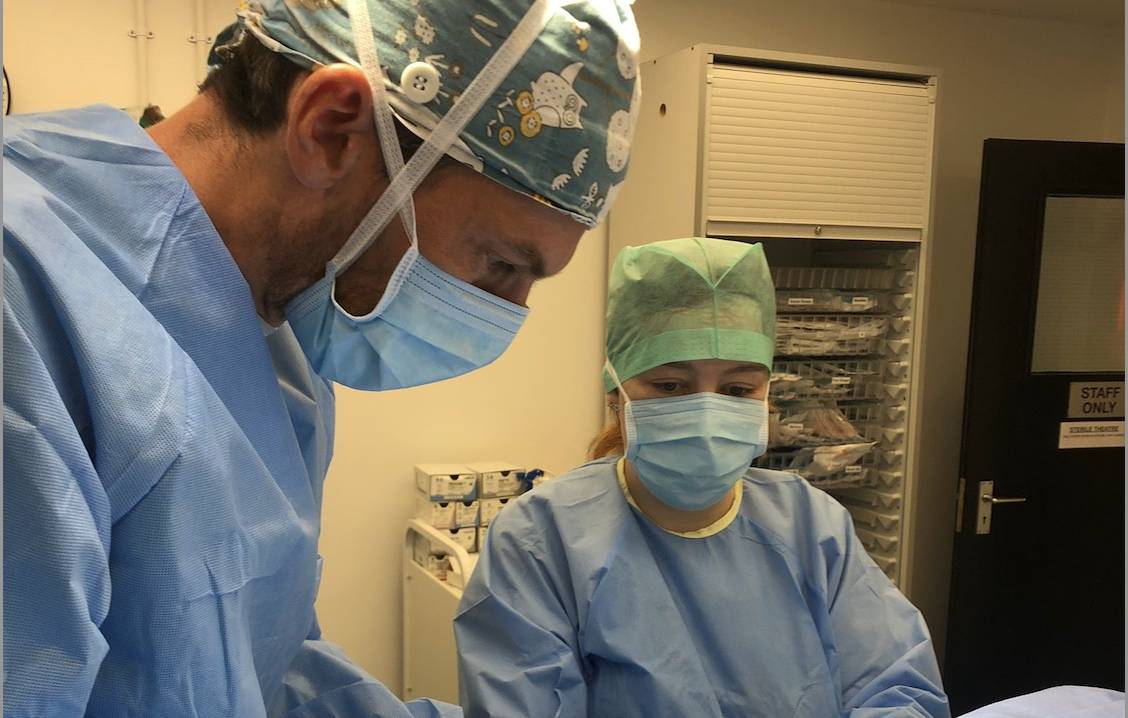
Cruciate Rupture Surgery
The most common cause of hind-leg lameness in dogs — and something we treat regularly at Kelperland.
Cruciate rupture, disease or tear is the commonest form of lameness in the hind leg of a dog.
If your dog has been diagnosed with this problem then it can be confusing and overwhelming — hopefully this page will help. If your dog has a cruciate problem and you want some advice then do get in touch.
Simon is happy to see cruciate cases for a free initial consultation — to examine your dog and advise you on the best course of treatment with no obligation to have surgery here. Just get in touch and (unless Simon is away) you will usually be able to get an appointment within a week.
What is the cruciate ligament?
The cruciate ligament is a very important ligament which sits in the middle of a dog’s knee joint, holding the bones around the joint together when the dog puts his foot down. When that ligament becomes diseased, weakens, or simply snaps it causes the bones around the knee joint to ‘wobble’ around when the foot is put down — this ‘instability’ means the dog cannot use that leg normally and becomes lame.
The lameness seen can range from severe (i.e. can’t put the foot down at all), to mild (only showing a slight limp on running). The joint will swell up causing significant pain. If this problem goes untreated it is most likely to lead to long-standing pain, lameness and then severe arthritis in later life.
Signs to look for
- ✓ Sudden lameness or reluctance to bear weight on a hind leg
- ✓ Sitting with the leg stuck out to the side
- ✓ Gradual worsening lameness over weeks or months
- ✓ Muscle wastage in the affected leg
- ✓ Swelling around the knee joint
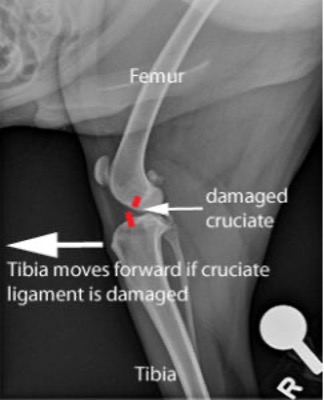
How we diagnose it — cranial drawer
A knee joint without a functional cruciate ligament becomes unstable and this can be diagnosed on the animal by feeling the knee, especially when they are sedated and all their leg muscles are relaxed. This movement is called cranial drawer and is one of the ways that we diagnose cruciate problems in dogs.
In this video, you can see the leg is ‘wobbling around’ as Simon manoeuvres it — and it shouldn’t. The dog’s other knee is completely stable; you can see he cannot move the bones around that knee at all. This movement is cranial drawer.
It is a condition that can affect dogs of any age. The main issue is that when the ligament weakens or snaps it frays (just like when a cut rope frays at the edges) which means it cannot simply be stitched back together — the stitch doesn’t hold and the knee would remain unstable.
This fact means that the veterinary profession has taken years to work out surgical solutions for this problem. Thankfully we now know what works best — it is generally regarded that cutting and moving the shin bone (tibia) is the best form of technique. These surgeries are called osteotomies and the goal of all of them is to change the shape of the dog’s knee in such a way that it doesn’t need a cruciate ligament at all.
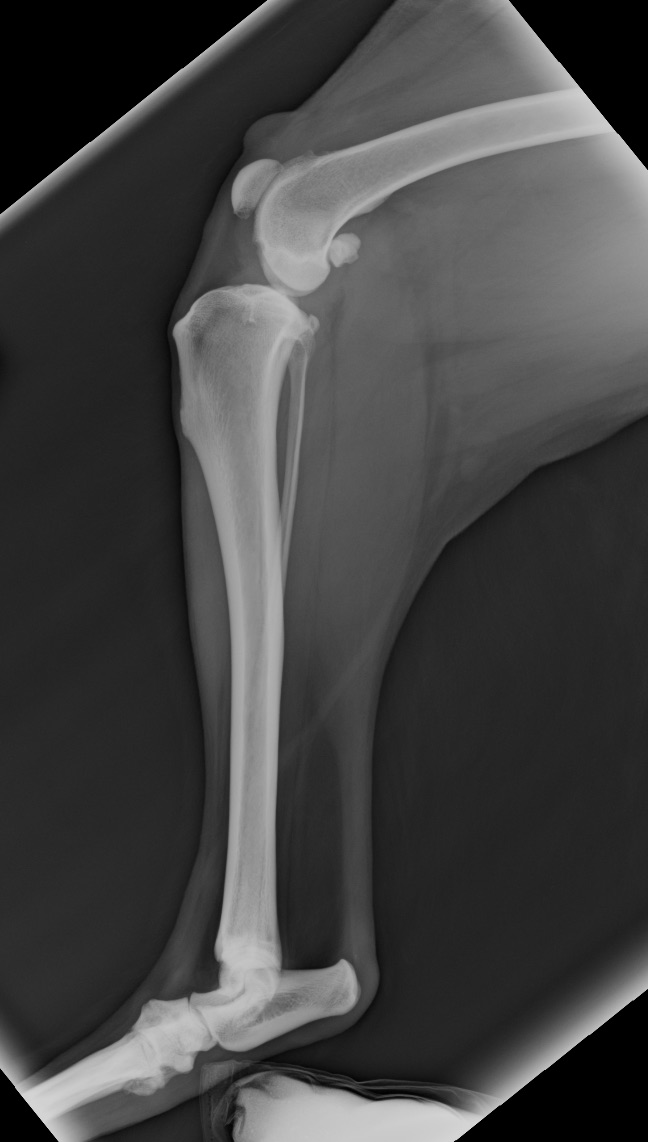
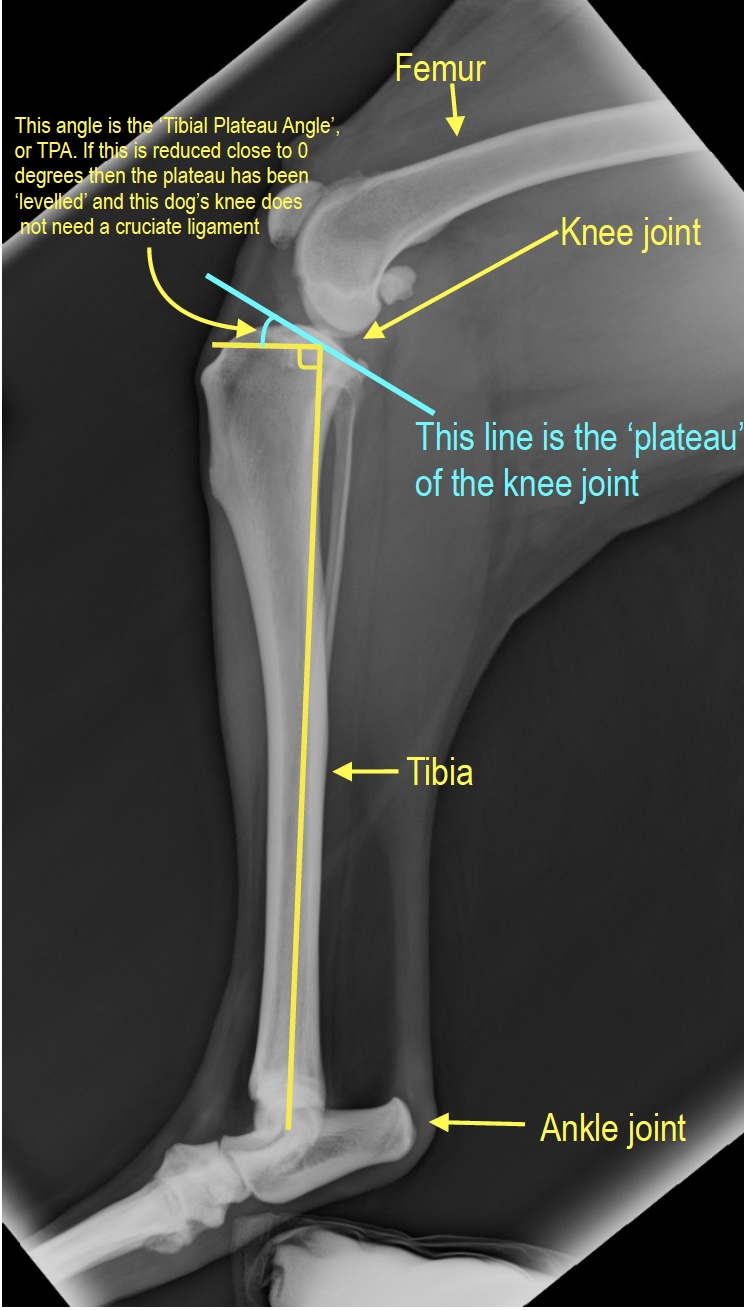
Pre & post-operative X-rays
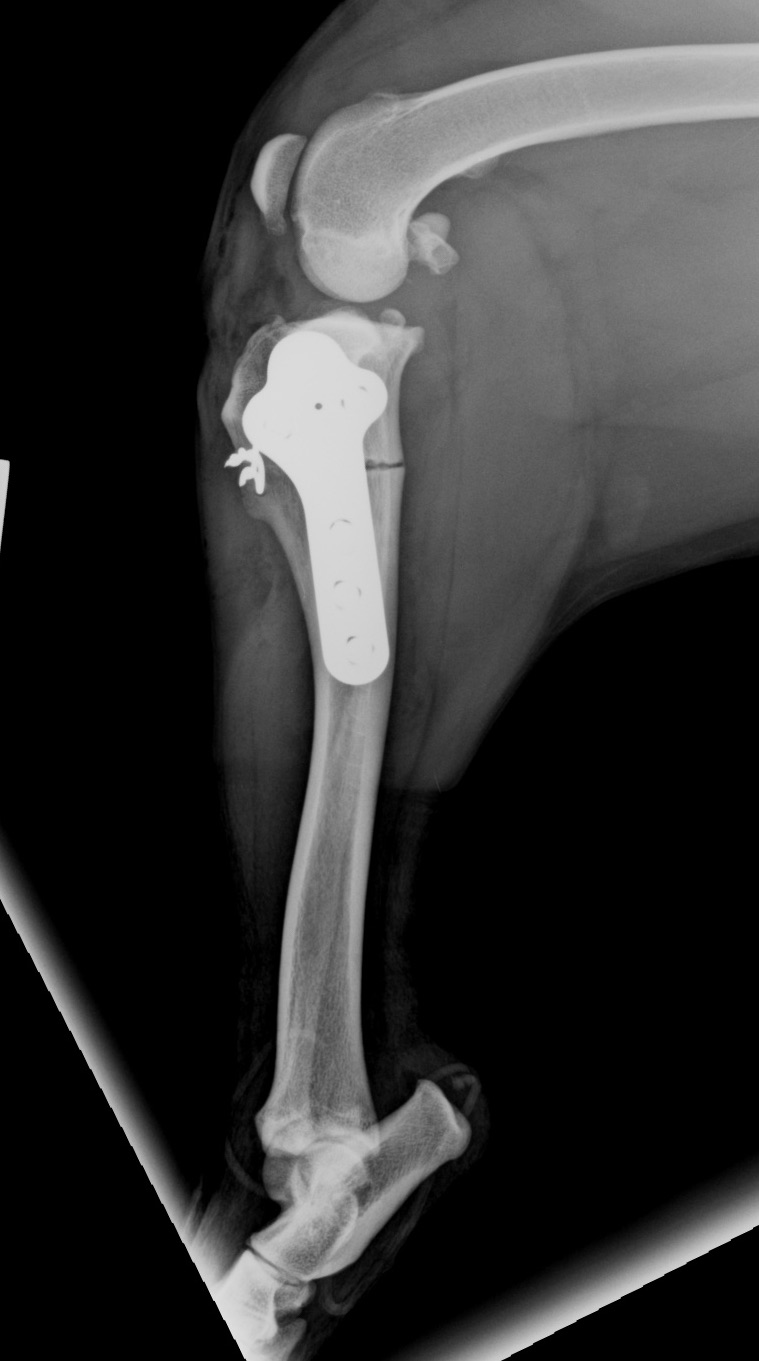
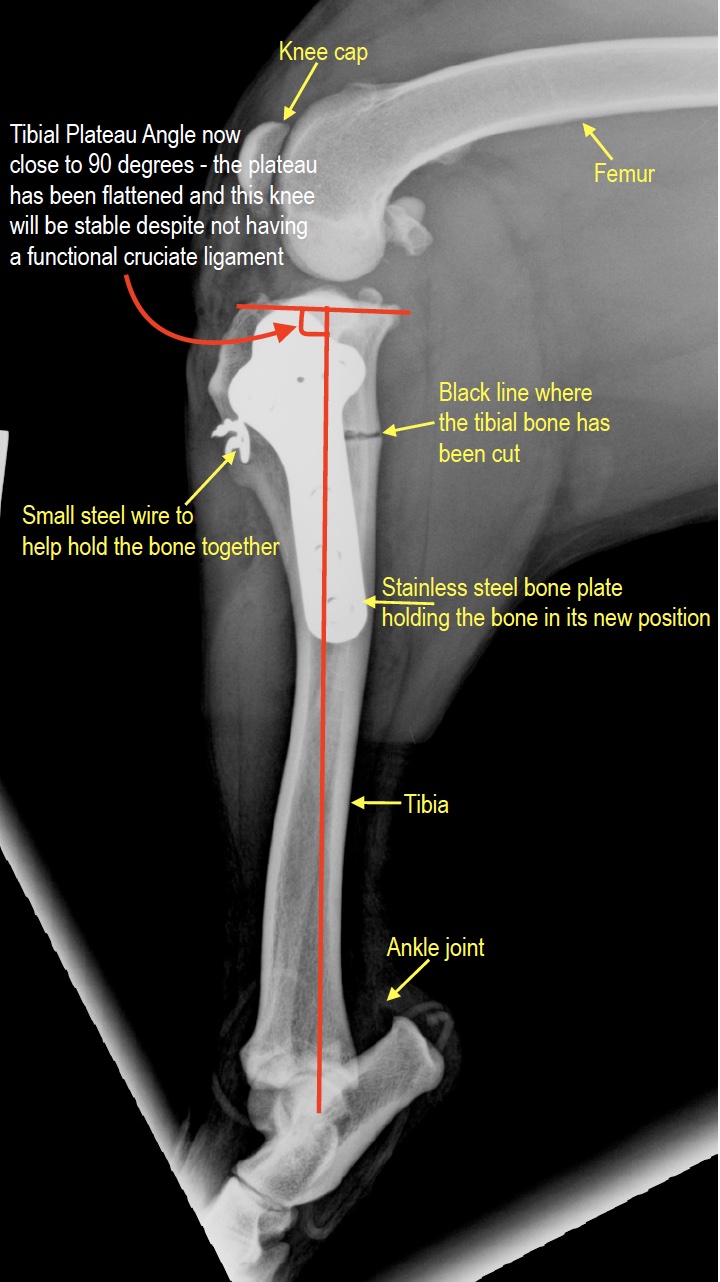
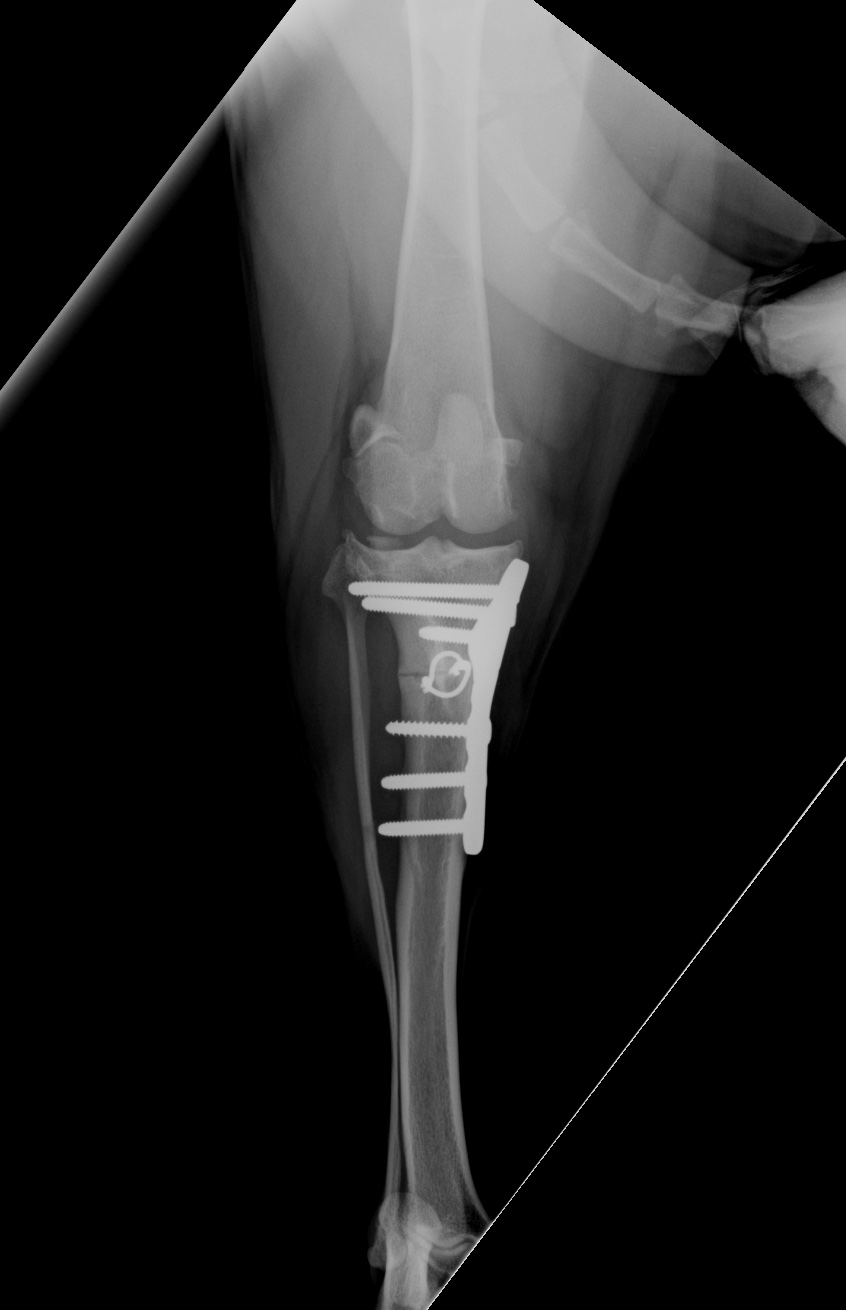
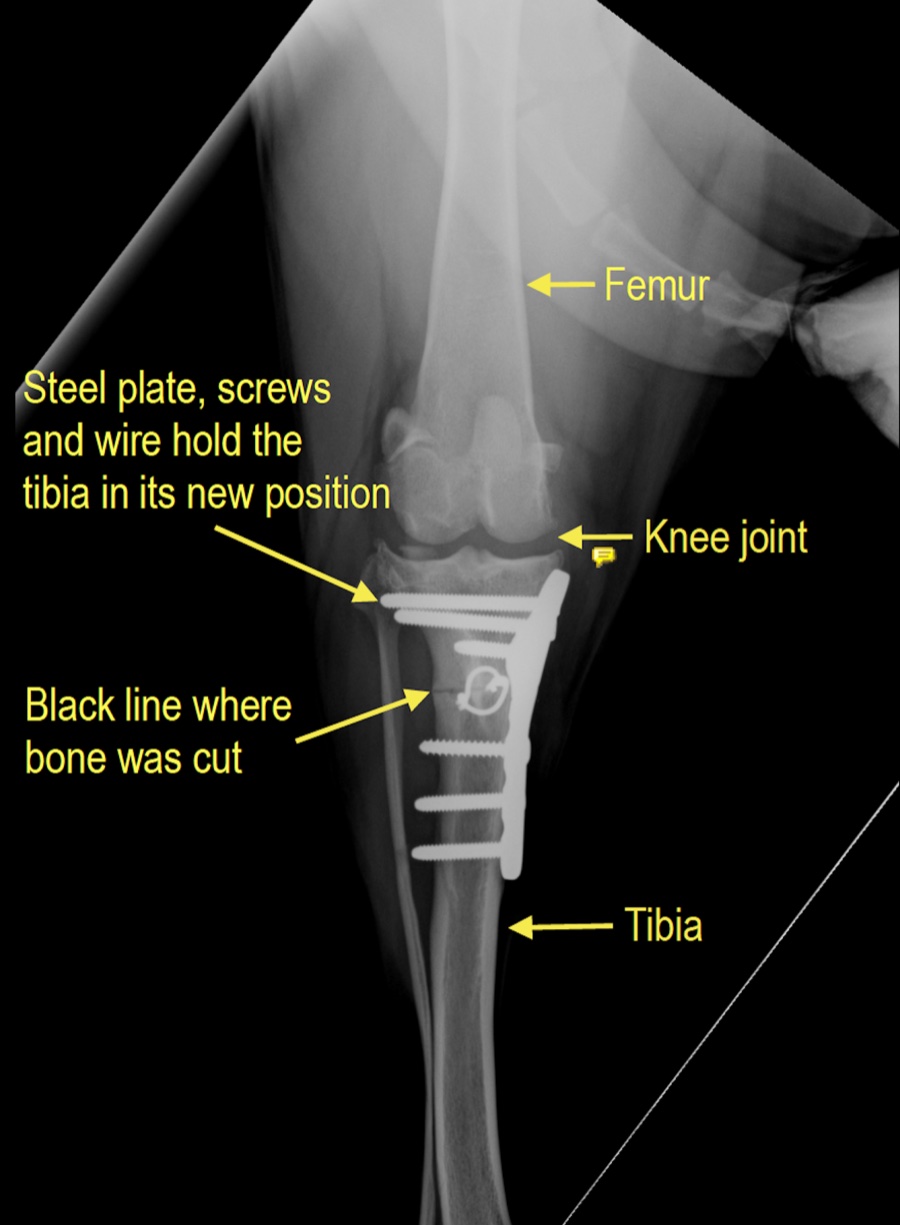
These are actual X-rays from a TPLO case at Kelperland, showing measurements taken pre-operatively and the fixation plate in place afterwards.
TPLO surgery at Kelperland
Here at Kelperland we perform the ‘wedge’ TPLO version — Tibial Plateau Levelling Osteotomy — which basically means we ‘flatten off’ the top of the shin bone.
How TPLO works
A wedge of bone is removed from the shin bone, measured precisely from pre-operative X-rays. The two remaining pieces of shin bone are compressed together — changing the angle of the top of the shin bone within the knee. The bone is fixed in position with a large stainless steel plate and screws.
This changes the shape of the dog’s knee so it no longer needs a cruciate ligament at all.
Recovery
The post-operative period is very important and strict instructions will be given about resting your dog after surgery. The total rehab period is 12 weeks, but in the second six weeks your dog will typically be walking pretty normally, restricted to on-lead exercise only.
Simon will guide you through this process and check in regularly to ensure everything is progressing as planned. Sometimes we X-ray cases post-operatively — if so, the cost is included in the initial surgery fee.
Alternative: lateral suture
We appreciate that TPLO surgery is costly and we do offer an alternative — a lateral tibio-fabella suture. This involves stitching the femur (thigh bone) to the tibia (shin bone) to stop them being unstable. It is a much older technique that works in some cases, mainly smaller, more sedate dogs.
The main drawback is that if the stitch breaks (which can happen), the joint remains unstable and TPLO may still be needed. We mainly recommend TPLO in the first instance, but this can all be discussed at your initial appointment.
Free initial consultation
Simon is happy to see cruciate cases for a free initial consultation — to examine your dog and advise you on the best course of treatment with no obligation to have surgery here. Just get in touch and (unless Simon is away) you will usually be able to get an appointment within a week.
Get in touch“We find that TPLO works very well in dogs of all shapes and sizes. It is the technique of choice here for all cruciate cases.”
Simon Ratcliffe, RCVS Advanced Practitioner
Pricing
The cost for a TPLO including aftercare appointments is £3,750. The lateral suture alternative is £2,000. If your dog has a cruciate problem you are welcome to contact us to book a free appointment with Simon. He can examine your dog and advise on the best course of treatment with no obligation to have it here.
We also accept referrals from other veterinary practices. Full details are available via our dedicated surgical referrals website.
Visit Kelperland Surgical Referrals